The three lesson formats explained
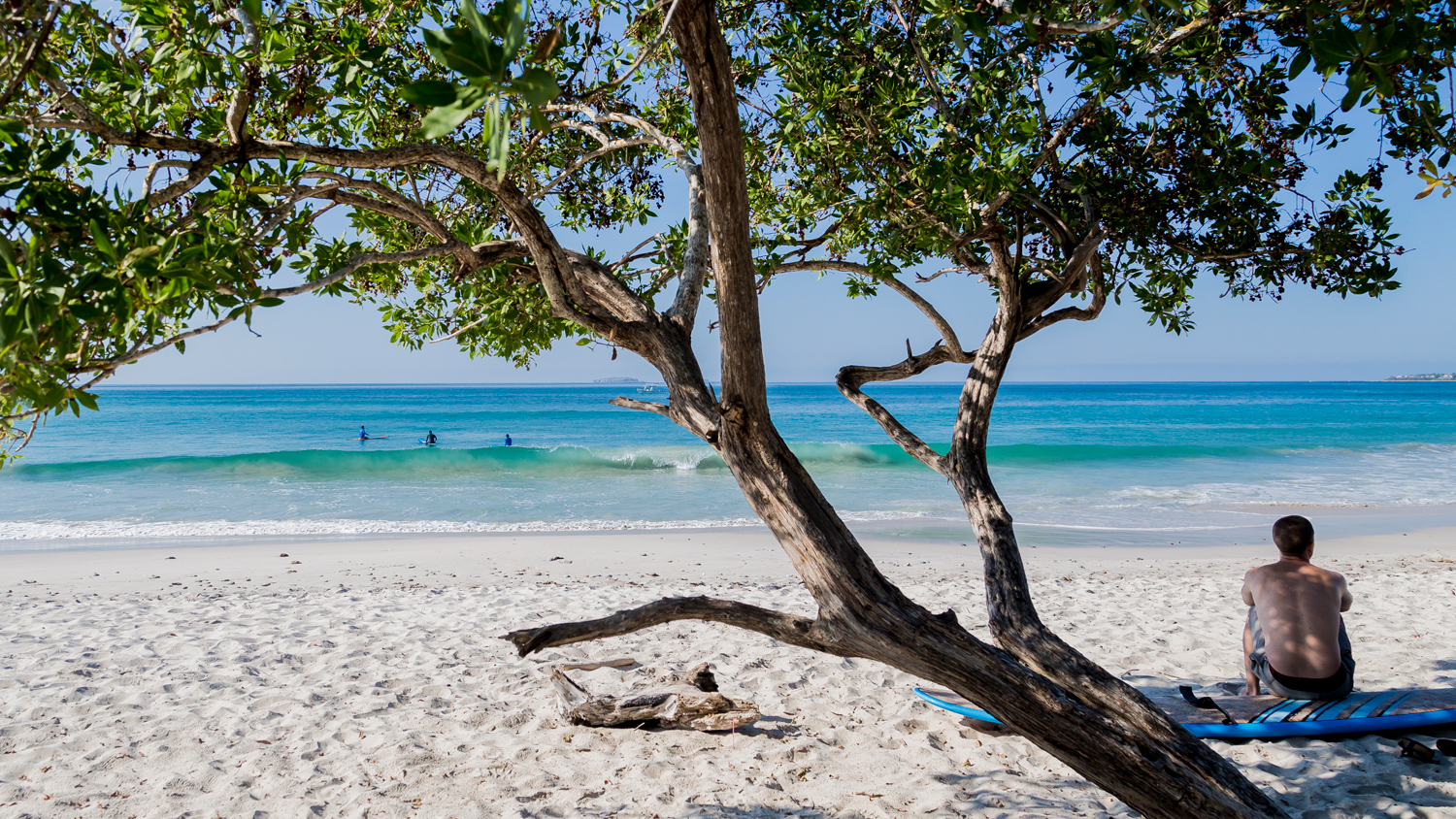
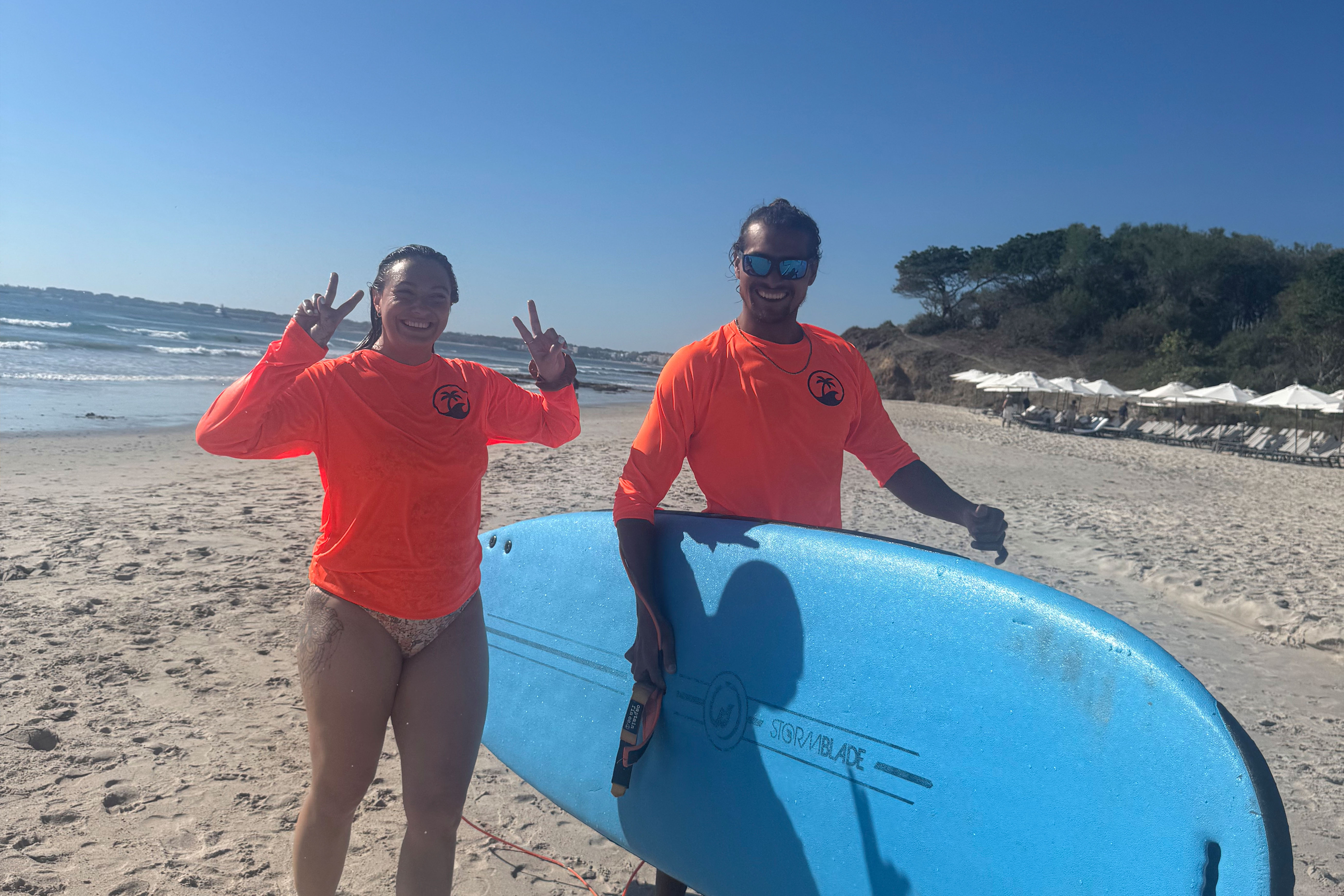
The phrase group lesson can describe two importantly different arrangements. In a private lesson, one learner books the instructor. The instructor can concentrate observations, questions, demonstrations, and pacing on that person, while still adapting the plan to conditions. In a private group lesson, a couple, family, or circle of friends supplies the participants: outsiders do not normally join that closed booking. Attention is divided within the group, and the instructor may vary tasks for each person.
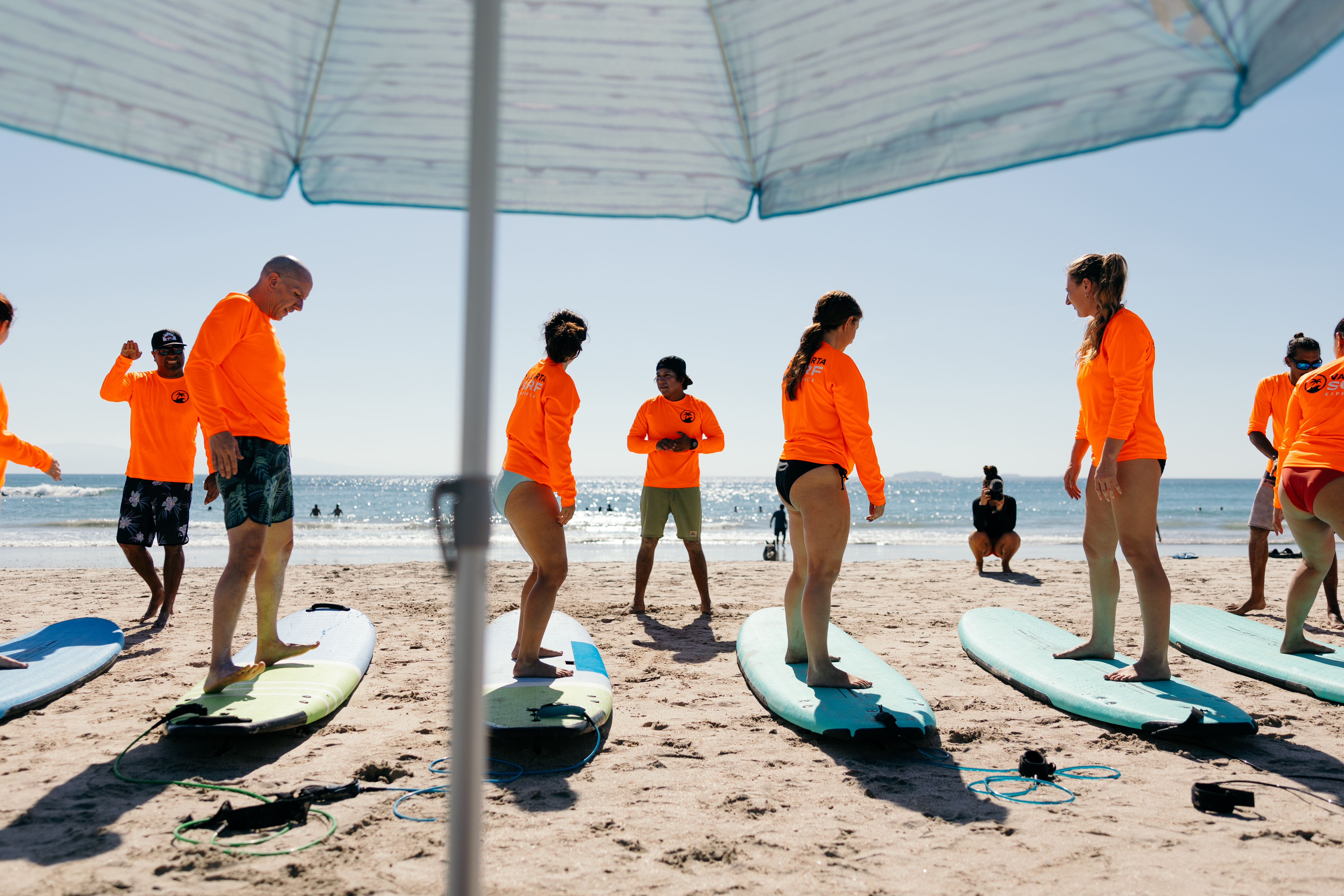
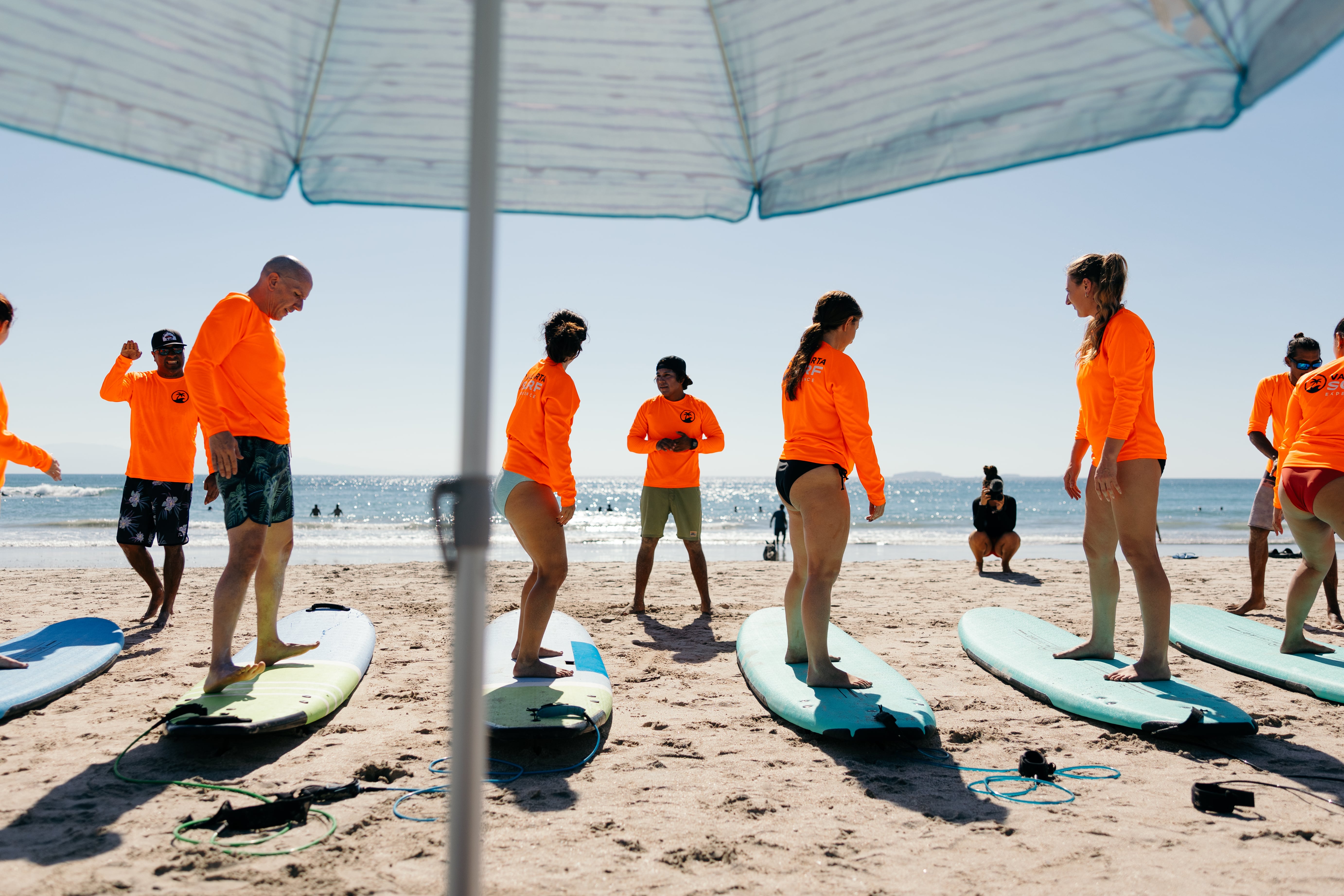
In a shared group lesson, individuals or smaller parties join other travelers assembled by the operator. Participants accept that they do not control the complete group composition. Instructor attention is distributed across everyone, and the pace must account for broadly compatible—but rarely identical—needs. Availability can depend on whether a workable group forms, operating requirements, and the day’s conditions.
These labels describe composition and attention, not a guaranteed curriculum or result. Anyone new to the activity can first read our beginner guide to learning to surf. The lesson-format overview then explains the available service options without replacing a conversation about suitability.
When private instruction makes sense
One-to-one instruction can make sense for a nervous first-timer who benefits from a calm explanation and frequent check-ins. It can also help a progressing surfer arrive with a focused technique goal—such as positioning, paddling efficiency, or a recurring stance issue—because observations are not divided among several learners. Travelers who value flexible pacing may appreciate being able to pause for a question, repeat a drill, or recover without feeling they are holding up companions.
Mobility, injury history, hearing or communication needs, language preferences, and pronounced anxiety can all make concentrated attention useful. These needs should be disclosed before booking so the operator can decide whether it can adapt responsibly; a private label does not make every need or condition manageable. The same is true for experienced board-sport athletes: transferable balance may help, but it does not establish ocean judgment.
Private instruction is not automatically faster or better. Observing peers can clarify a demonstration, and some learners relax around others. Repetition also depends on wave timing, fatigue, positioning, and conditions. Treat the individual lesson description as format information, then ask how the proposed session fits your actual goal.
When a private group works well
A private group works well when couples, families, or friends care most about sharing the experience without being matched with strangers. Familiar people may communicate comfortably, encourage one another, and coordinate travel easily. A closed group can also provide useful context when confidence levels differ: the instructor knows exactly who plans to attend before deciding how attention could be allocated.
Closed does not mean uniform. One partner may be ready to paddle while another needs more shoreline practice. A child may need closer boundaries; a confident adult may need reminders not to move ahead of the lesson plan. Different exercises can be the responsible way to keep everyone engaged. Likewise, identical progress cannot be promised simply because participants arrived together.
Before choosing a closed private group lesson, decide whether staying physically together is more important than everyone receiving precisely the same pace. Give the operator an honest participant profile rather than averaging the group into “beginners.”
Instructor attention and feedback
Private feedback is concentrated: the instructor can observe more attempts by one person and follow up immediately. Yet more comments are not always more learning. A learner still needs time to try a cue rather than receive a new correction after every movement. In groups, observing someone else, hearing a shared explanation, and mentally rehearsing while waiting can be productive.
Waiting can also become unhelpful if group management, wave opportunities, or very different abilities leave too little meaningful repetition. The relevant question is not simply “How many people?” but “How will the instructor distribute demonstrations, supervised attempts, personal questions, and rest?” A well-matched group can create useful learning loops; a poorly matched one can stretch attention. Private instruction reduces that distribution problem but gives up peer observation and social energy. Neither format wins every trade-off.
Ability, confidence, and swimming comfort
A useful participant profile goes beyond “first-time” or “intermediate.” Describe swimming confidence, comfort when moving water pushes the body, anxiety around depth or submersion, mobility, current injuries, age differences, and previous board-sport experience. State communication or language needs clearly. An instructor needs this information to judge supervision and pacing before assigning a format.
Swimming confidence does not remove ocean hazards, and weak comfort in moving water should not be hidden to remain with friends. The CDC’s healthy swimming guidance emphasizes that swimming-related environments carry health and safety considerations. Locally, the instructor must combine participant information with current observation. Self-declared experience alone cannot determine the appropriate lesson, location, or boundary.
Couples, friends, and families
Groups should rank three priorities: staying together, receiving identical pacing, and obtaining individual support. Usually, not all three can be maximized. Couples who mainly want a shared memory may accept alternating attention. Friends with sharply different goals may prefer separate instruction even if they travel together. A family may value a closed group but still need differentiated exercises so each person receives suitable support.
For minors, a parent or guardian should share accurate swimming, health, communication, and anxiety information and ask how supervision and participation are handled. Operators should explain their own policies rather than travelers assuming a universal age rule. The guardian and operator must decide whether the proposed arrangement is appropriate; this guide does not invent legal thresholds or guarantee that children can join a particular format.
Mixed-level groups need an honest plan
Imagine one booking with a first-timer, a progressing beginner, a strong swimmer who has never surfed, and an anxious participant. Those labels overlap imperfectly. The strong swimmer still needs board control and surf-specific awareness; the progressing beginner may be ready for a task that is distracting or unsuitable for the first-timer; the anxious learner may require closer positioning and more time.
An instructor might establish different practice zones, assign different exercises, rotate feedback, or keep one person under closer supervision. If those adaptations would divide attention too far, a different format or separate sessions may be necessary. Ask whether the group can share a start and finish while completing different work. Honest differences do not “ruin” a group; they allow the operator to avoid an arrangement that looks convenient but is not manageable.
Conditions still determine the lesson
No booking format overrides the ocean. Swell, tide, wind, weather, current, visibility, water quality, crowding, access, and current local observations all affect whether a site and supervision plan remain appropriate. Read the broader Puerto Vallarta surf guide for regional context and the seasonal guide for planning patterns—not promises.
Rip currents can occur near breaking waves and move swimmers away from shore; NOAA advises checking conditions and swimming where lifeguards are present when possible. Thunder is also a reason to leave the water: the US National Weather Service advises going indoors when thunder is heard. The instructor’s current assessment remains decisive, including when water quality, access, or crowds create a problem.
Private, private group, and shared group compared
| Format | Best suited to | Instructor attention | Group composition | Main trade-off | Questions to ask before booking |
|---|---|---|---|---|---|
| Private | Individual pacing, focused goals, or significant support needs | Concentrated on one learner | Learner controls being alone; operator confirms suitability | No peer observation or group energy | Can my goal or adaptation be supported in expected conditions? |
| Private group | Couples, families, and friends who value a closed experience | Divided within the known group | Booking party chooses participants | Different needs can reduce shared pacing | How will mixed confidence and individual feedback be handled? |
| Shared group | Solo or social travelers with compatible needs who accept shared attention | Distributed across assembled participants | Operator matches separate bookings | Less control over pace, composition, and availability | How are participants matched, and what if no suitable group forms? |
A simple decision framework
- Do I want to learn alone or with people I know? Separate a desire for privacy from a desire to keep companions together.
- Are abilities and confidence levels similar? Describe each person, not just the most experienced member.
- Do I need adapted pacing? Identify mobility, injury, communication, language, or anxiety considerations early.
- Am I comfortable sharing instructor attention? Consider waiting, observing, and asking questions in a group.
- Is social interaction part of the experience I want? Peer energy may be a benefit rather than a compromise.
- Are there health or support considerations? Disclose them before the operator proposes a format.
- What is appropriate under expected conditions? Ask for a provisional recommendation, then accept that the day’s assessment can change it.
Choose private instruction when individual pacing and focused feedback matter most. Choose a private group when learning together in a closed group matters most. Choose a shared group when participants accept shared attention and value a social format. There is no universal winner: in every case, the operator and instructor must confirm suitability from participant needs and current conditions.
Frequently asked questions
Is a private surf lesson better for a complete beginner?
It can be a good fit when a beginner needs individual pacing, has significant anxiety, or wants more time for personal questions. A shared or private group can also suit a confident beginner when abilities, supervision, and conditions align. The instructor should assess the person rather than assume private is automatically better.
Can couples take a private surf lesson together?
Couples can usually consider a private group format if they want a closed lesson, subject to the operator’s suitability assessment and current conditions. Different confidence or ability may mean different exercises and attention within the same session; learning together does not guarantee identical pacing.
Are shared group lessons suitable for children?
Sometimes, but suitability depends on the child’s age, swimming comfort, communication, supervision needs, the other participants, and current conditions. A parent or guardian should disclose relevant needs and ask the operator how minors are supervised; a private or private group format may be recommended instead.
What happens when people in the same group have different abilities?
An instructor may assign different exercises, adjust boundaries, give one participant closer supervision, or recommend separating the lesson formats. Whether a mixed-level group can remain together depends on how large the differences are, the instructor’s ability to manage them, and the conditions.
Can a lesson format change because of ocean conditions?
Yes. Swell, tide, wind, current, weather, visibility, water quality, crowding, and access can affect appropriate group composition and supervision. The operator may modify, relocate, postpone, or cancel a lesson; a private booking does not guarantee that entering the water is appropriate.
Sources and local review
External factual guidance:
- Rip Current Safety, NOAA Ocean Service — General guidance on rip-current behavior and coastal water safety.
- Lightning Safety When Working Outdoors, US National Weather Service — Official guidance to move indoors when thunder indicates lightning risk.
- About Healthy Swimming, US Centers for Disease Control and Prevention — General health and safety context for recreational water participation.
First-hand local editorial guidance: Manual local review of lesson-format distinctions, instructor-attention boundaries, mixed-level group management, participant suitability, condition dependence, and separation from commercial keyword intent. Final suitability still depends on disclosed needs and current observations. Reviewed by Buena Ola Surf Co. Editorial Team on .